Emil Hrvatin

Emil Hrvatin is author and director of interdisciplinary performances such as “Miss Mobile“ and “We Are All Marlene Dietrich FOR – Performance for soldiers in peace-keeping missions“ (together with Erna Ómarsdóttir). His book on Jan Fabre (“Jan Fabre – La Discipline du chaos, le chaos de la discipline,“ Armand Colin, Paris 1994) was published in Dutch, Italian and Slovene. He is director of Maska, an institute for publishing, production and education, based in Ljubljana, Slovenia.
He currently works on the reconstruction of a 1969 piece “Pupilija, Papa Pupilo and the Pupilceks.“
What do you teach? I am not a regular workshoper. I have nothing to teach. I can only organize transfer and exchange of knowledge situation. Workshop is the situation in which different modes of knowledge exchange are rehearsed. Coaching is, for example, a situation in which it is a visiting coacher who has to learn about the artists‘ work, their approaches and concepts as well as context they deal with. Coacher is actually a wonderer and not subject supposed to know. Studio is an artistic headquarters where different specialists debate, rehearse, negotiate and practice strategies and tactics of artistic ...
Weiterlesen mit dem digitalen Monats-Abo
Sie sind bereits Abonnent von tanz? Loggen Sie sich hier ein

- Alle tanz-Artikel online lesen
- Zugang zum ePaper
- Lesegenuss auf allen Endgeräten
- Zugang zum Onlinearchiv von tanz
Sie können alle Vorteile des Abos
sofort nutzen
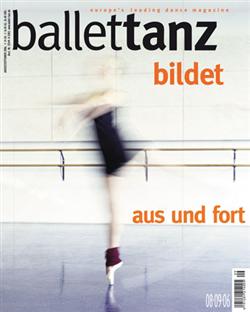
Sie sind ein zeitgenössischer Ballettchoreograf. Ist das Ausbildungsniveau junger klassischer Tänzer für ihren Bedarf ausreichend? Grundsätzlich ist hier immer noch das sehr verhaftet, was wir «russisch» nennen: Zum Beispiel, immer so extrem auswärts zu stehen – das ist im Prinzip nur eine ungesunde Äußerlichkeit, die der Bewegung nichts bringt und den Tanz...
For any butoh dancer, it would be a challenge requiring extra determination to recreate “Kin-Jiki,“ based on the novel of the same name by Yukio Mishima. “Kin-Jiki” became a legendary work in butoh. It is considered to be the very first piece by its founder, Tatsumi Hijikata, in 1959. The piece, which literally means “forbidden colour” deals with the theme of...
Am 27. Mai verstarb eine der letzten Zeitzeuginnen des deutschen Ausdruckstanzes. Sie wurde am «Choreografischen Institut» Rudolf von Labans zur Pädagogin ausgebildet. Ende der 1920er und Anfang der 30er Jahre arbeitete sie u. a. in den Berliner Bewegungschören Laban, beim Kunstverein in Libau (Lettland), in der Laban-Tanzgruppe von Annemarie Dunkel und Edgar...