Expensive

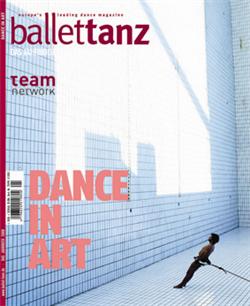
Why is there a double-digit million dollar difference between Damien Hirst’s shark in formaldehyde and the aquarium dances of Sasha Waltz or William Forsythe?
The answer is obvious? One is art and the other lasts 90 minutes. Stop! THAT difference is based on the inability to let go of our past as hunters and gatherers. And however reasonable it seems to treat dance and visual arts differently at the cash register, you might not do so quite as nonchalantly after examining the reasons that cemented your precept.
Like: the long-standing reputations of both art forms (built on criticism and popular prejudice), their respective aesthetic value (aka “beauty”), and, unavoidably, the money and time spent on either, two aspects much entwined.
“If I hear art …”
Assuming the above-mentioned are all three of them genuine artists, who have made a name for themselves in and beyond their domain, have garnered applause and met with suspicion, the striking gap in maximum turn-over remains. Why now is “a Hirst” so expensive? Because, probably after consulting an expert, some Jack Palance is willing to pay for exclusive ownership, and the art critics and other experts refrain from laughing. ...
Weiterlesen mit dem digitalen Monats-Abo
Sie sind bereits Abonnent von tanz? Loggen Sie sich hier ein

- Alle tanz-Artikel online lesen
- Zugang zum ePaper
- Lesegenuss auf allen Endgeräten
- Zugang zum Onlinearchiv von tanz
Sie können alle Vorteile des Abos
sofort nutzen
Tänzer des Jahres
sind Sylvie Guillem und Raimund Hoghe. Man kann sich kaum einen größeren Kontrast vorstellen, nicht bloß, was die Körpergröße betrifft.
Sylvie Guillem
überzeugte, ja überraschte in den Duetten «Push» mit Russell Mali-phant und «Sacred Monsters» mit Akram Khan, weil sie die klassische Linie ganz entspannt durch die längst offen stehende Tür zum...
“We all wanted to become ballet dancers, football players, astronauts, where did we go so wrong?” Berlin’s theatre group Gob Squad asked in one of their shows. The action had the group’s members sit from nine to five behind desks in a slick office building. With the professional smiles of financial advisers, they revealed the labour market’s ugly strategies to...
“I don’t like dance,” says Ben J. Riepe. The 29 year-old choreographer is serious: “The attitude, the affectation, the intrigues.” Dance has not yet realised its potential and is still hanging on to old ballet clichés. “Contemporary dance is all the same, simply awful,” he says scathingly, raising his voice a few decibels – not only because the Düsseldorf bar where...