The Fatal Ball

One day in the month of October, 1506, Albrecht Dürer writes a letter from Venice to his friend and sponsor in Nuremberg, Willibald Pirckheimer. It is full of heavy-handed banter, and one of the things that the artist recounts to his friend in Germany is the rather surprising fact that he has undertaken to learn to dance. He has, he says, been to dancing school twice already and pays the maestro one Ducat in return for being taught the fashionable steps of the time.
No more is said regarding these lessons in the often rather severe painter’s correspondence, so we do not know what dances he came to master, nor where he intended to practise them. But it is a nice image to picture; Dürer passing his autumn evenings on the dance floor among Venetian beauties.
Thus the leading artist of the German Renaissance is another link in the centuries-long line of earthlings who have all pursued the happy exercise of acquiring dance skills. It is a line that extends through the ages, from the unknown steps of the Stone Age to our own times. Medieval ideas of paradise and heavenly love centred round a lush and lovely garden where men and women danced and played music together. Such idylls are ...
Weiterlesen mit dem digitalen Monats-Abo
Sie sind bereits Abonnent von tanz? Loggen Sie sich hier ein

- Alle tanz-Artikel online lesen
- Zugang zum ePaper
- Lesegenuss auf allen Endgeräten
- Zugang zum Onlinearchiv von tanz
Sie können alle Vorteile des Abos
sofort nutzen
Helsinki Dance Company is Helsinki City Theatre’s resident dance group, which comes up with two dance premieres per year created by group leader Ville Sormunen and the dancers. In addition, the company takes part in the theatre’s musical productions, which have at least doubled in number during manager Asko Sarkola’s tenure. As long as the shows are well produced,...
Auch nach dem Leben gibt es ein Leben. Gérard, gebeugt unter der Last des Alters, erinnert sich seiner Jugend: Elisabeth, die er bis zur Selbstverleugnung verehrt, und Paul, der geliebte Freund: Bruder und Schwester, die selbst im Tod nicht voneinander lassen können, geschweige denn im Leben, dem sie selbst ein Ende setzen. Hannes Seebauer erzählt, und von der...
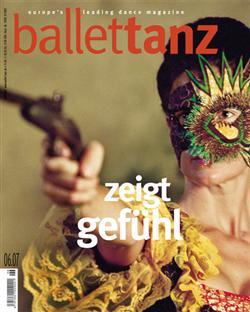
Sind Emotionen das, was uns Tänzer vermitteln, wenn sie sich einfühlen in Rolle, Musik und Haltung? Und was fühlen wir, wenn Tänzer fühlen? Ehrlich: Gefühle teilen sich nur Liebende, nicht das Publikum mit der Kunst.
Viele reden von einer «Wiederkehr der Emotion», aber was meinen sie? Dass wir nicht vergessen sollen, das Taschentuch ins Theater zu tragen? Dass der...