Alastair Marriott

Choreographic method is a highly individual process. It is well known that Marius Petipa would walk into the rehearsal studio with every step worked out in his head, then in his tiny vocabulary of broken Russian, indicate the direction of an enchaînement in relation to his own position in the room. Frederick Ashton, conversely, absorbed every phrase of his chosen music by a continuous process of listening over many weeks or months, arriving at the studio knowing the structure of the ballet he was about to create but without a single step prepared.
He would then employ his considerable craft in placing dancers into position, physically manipulating them like a sculptor working with clay.
Although we have these, and other, important historic examples of creative rubrics, the available models of choreographic method are virtually limitless. What really matters, however, is how the method shapes the final dance work. Alastair Marriott created a big splash with his first major commission, “Being and Having Been,” created for the Royal Ballet’s Inspired by Diaghilev season in 2004, and was immediately nominated for a Critics’ Circle National Dance Award for Best Choreography. What drove ...
Weiterlesen mit dem digitalen Monats-Abo
Sie sind bereits Abonnent von tanz? Loggen Sie sich hier ein

- Alle tanz-Artikel online lesen
- Zugang zum ePaper
- Lesegenuss auf allen Endgeräten
- Zugang zum Onlinearchiv von tanz
Sie können alle Vorteile des Abos
sofort nutzen
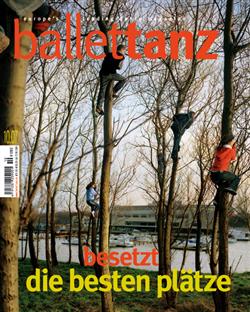
Jüngst schickte William Forsythe seine Zuschauer im Gänsemarsch durch einen Nebeneingang ins Bockenheimer Depot in Frankfurt. Wölfl schleust einen Teil seines Publikums durch das hintere Abteil einer Stretchlimousine, wo ein schlafender Nackter und zwei anscheinend kriminelle Hallodris auf Besucher warten, damit sie ihre Plätze im Marstall von Schloss Benrath...
Erst ein Sturz auf der Bühne konnte ihren Tatendrang bremsen. Aber bis 1967 stand Clara Góra als Erste Solistin, Ballettmeisterin, choreografische Assistenz und Muse ihrem langjährigen Ehemann Imre Keres selbstlos und hilfreich zur Seite. Ihn hatte sie nach dem Ungarn-Aufstand 1956 auf seinem steinigen Weg über Hannover, Lübeck bis hin nach Wiesbaden begleitet –...
Tunte sein. Oder zumindest schwul. Ein spezieller Wunsch, zugegeben, aber für eine atemlose Homo-Revue nicht unangebracht. Vier männliche Objekte fegen in «Stupid Men» über die Bühne und durch die Zuschauerreihen, und für jeden Geschmack ist etwas dabei: straff-durchtrainiert, gemütlich-aufgeschwemmt, sehnig-frustriert. Ihr Unterhaltungsprogramm zur Biennale de...