Where is the Love?

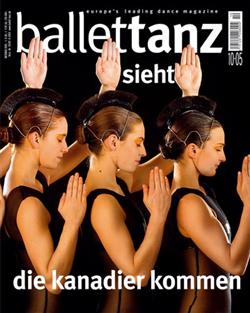
Over the last century dance has traveled from continent to continent, shifting its focal points of creativity and intensity. Historically, the fluctuating cartography situates long traditions in Berlin, Paris, and London. In the mid-1980s rejuvenation occurred in places like Brussels, Ljubljana, Barcelona, and Montéal.
Guy Cools, the former dance programmer and artistic coordinator at the Vooruit Arts Centre in Ghent, who was named artistic director of Montréal’s Fondation Jean-Pierre Perreault in its final days, takes the view that artistic identities, individual qualities and geographic content are linked. “There were new territories – where a group of individuals, and dialectics between them, started to be powerful.”
Montréal rose up as a key centre of dance invention, Cools speaks of a generation of choreographers, led by someone like Paul-André Fortier, “who didn’t necessarily have international recognition, but who influenced a generation.” In fact, there was a diversity of voices within Montréal’s ranks, including artists ranging from Fortier and Perreault, to Édouard Lock, Marie Chouinard and Ginette Laurin. Equally important, the dance community managed to organize itself ...
Weiterlesen mit dem digitalen Monats-Abo
Sie sind bereits Abonnent von tanz? Loggen Sie sich hier ein

- Alle tanz-Artikel online lesen
- Zugang zum ePaper
- Lesegenuss auf allen Endgeräten
- Zugang zum Onlinearchiv von tanz
Sie können alle Vorteile des Abos
sofort nutzen
“Polis” is the third part of the project “Ho male all’altro,” which means something like “the other hurts me” or “I hurt with the other;” a series of works by Michele Abbondanza and Antonella Bertoni begun in 2000 inspired by ancient Greek tragedies. After “Alcestis,” which looked at self-sacrifice through generosity and love, and “Medea,” the sacrifice of others...
Adam Cooper has been a star in Japan, famous for his superb dancing with English Royal Ballet, since his first charismatic appearance in Matthew Bourne’s “Swan Lake” AMP version. He has performed principal roles in Japan in “On Your Toes” and Matthew Bourne’s “Play Without Words.” Several years ago, the huge success of Bourne’s performances here inspired a...
Ein Walzer von George Balanchine gefällig, ein Lied von Serge Diaghilew? Lera Auerbach macht’s möglich. Auf der CD «Tolstoy’s Waltz» hat die Pianistin und Autorin aus der ehemaligen UdSSR ein paar Raritäten eingespielt, wahre Preziosen. Der «Valse lente» von Mr. B. beispielsweise, den er Madeleine Malraux verehrte: «Balanchine komponierte ihn relativ spät in seinem...