Jenseits

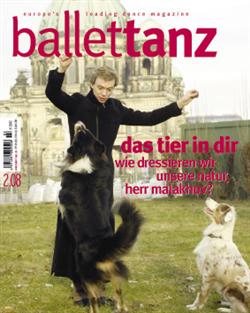
The Animal Theatre Manifesto
By Wayn Traub
1. The animal is the beginning and end of animal theatre. It is both the source and the aim.
2. Animal theatre is born of a deep desire, the cry of the animal in each of us (animus). The creator transforms this desire into action (animer) and if his performance is successful, the animal in man is aroused (animal). Theatre must rouse people from their winter sleep. These three phases can be of help here.
3.
Animal theatre speaks – through the codes and images and of its age – the language of all ages. The creator uses a language he masters and the audience knows, which makes it possible to transmit a universal message.
4. Animal theatre does not work with texts, but images. It is not based on an existing concept for the display of a personal interpretation or opinion. It is based on a personal view of life which gives form to the theatre.
5. Animal theatre must alienate. The actors transform into divine, animal beings so that the audience too will undergo the same experience. This theatre allows those present to travel to another world where they live in the proximity of and in unity with an unattainable truth. The theatre is metamorphosis, ...
Weiterlesen mit dem digitalen Monats-Abo
Sie sind bereits Abonnent von tanz? Loggen Sie sich hier ein

- Alle tanz-Artikel online lesen
- Zugang zum ePaper
- Lesegenuss auf allen Endgeräten
- Zugang zum Onlinearchiv von tanz
Sie können alle Vorteile des Abos
sofort nutzen
Since his early years, the material glass has been a source of inspiration for Saburo Teshigawara, as seen in “Bones in Pages” and “White Clouds under the Heels” commissioned by William Forsythe. As a choreographer with keen aesthetics, Teshigawara’s choreographic interest often focuses on how the body changes in reaction to outer elements, including glass, and how...
Tatjana Gsovsky beherbergte den Komponisten Hans Werner Henze, der im Gegenzug der Russin die Zwölftonmusik nahebrachte.
1952 entstand im Berliner Hebbel-Theater das Ballett «Der Idiot». Klaus Kinski mimte die Dostojewski-Figur. Ihm fiel ein Bühnenelement auf den Kopf. Für eine Weile verlor er das Bewusstsein. Ballett war noch Abenteuer. Was «Ballett» aber sei,...
In «Sonntags-Abschied» steckt Abschied. Es ist etwa zwei Jahre her, dass Karlheinz Stockhausen mir einen Brief schrieb: «Ich muss Ihnen etwas zeigen.» Das war einige Jahre nachdem er mir erlaubt hatte, ein Stück zu seinem «Helikopter»-Quartett zu kreieren. Er empfing mich in seinem Studio und spielte mir «Sonntags-Abschied» vor. Es war wie der Gesang der Sirenen...