Rize: Krumping in the movies

In David LaChappelle’s documentary, Rize, the pent-up rage of kids from Los Angeles’ South Central bursts off the screen and grabs you by the throat. But instead of violence, the anger takes shape in the exhilarating new dance forms called krumping and clowning. Clowning was invented out necessity and providence by an ex-drug dealer, Thomas Johnson (Tommy the Clown), who entertained at children’s parties, adding a street/pop dance twist to his routine. His dancers split off to found their own groups and subdivisions, numbering up to 80.
The film begins with scenes of Los Angeles’s volatile history, including the 1965 Watts Riots and the Rodney King chaos of 1995. Both arose from racial tension -- an underlying dynamic of the urban disaffection driving krumping, but not the only one. It’s more the steam venting from lives being lived against a backdrop of gang warfare, drive-by shootings, poverty, and drug addicted parents.
Tommy the Clown’s routine is made kid-friendly with a rainbow afro wig and bright coveralls. He is shown working at parties -- a Pied Piper of sorts blowing on a coach’s whistle, cajoling the kids to join in, alternately giggling and talking about his years in ...
Weiterlesen mit dem digitalen Monats-Abo
Sie sind bereits Abonnent von tanz? Loggen Sie sich hier ein

- Alle tanz-Artikel online lesen
- Zugang zum ePaper
- Lesegenuss auf allen Endgeräten
- Zugang zum Onlinearchiv von tanz
Sie können alle Vorteile des Abos
sofort nutzen
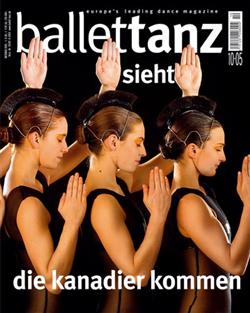
Over the last century dance has traveled from continent to continent, shifting its focal points of creativity and intensity. Historically, the fluctuating cartography situates long traditions in Berlin, Paris, and London. In the mid-1980s rejuvenation occurred in places like Brussels, Ljubljana, Barcelona, and Montéal. Guy Cools, the former dance programmer and...
The recently-founded Dancer Stage Academy (DSA) in Amsterdam is offering a postgraduate program from September 2005. Artistic directors Valerie Valentine, a former ballerina with the Dutch National Ballet and founder of the Amsterdam-based studio Dance Street, and Yehuda Maor, former director of San Francisco Dance Theater and developer of the Maor Placement...
Aaron Watkin, ein weiter Weg. Sie stammen aus Vancouver, tanzten in Frankfurt und übernehmen 2006 als Nachfolger von Vladimir Derevianko die Ballettdirektion der Dresdner Semperoper. Warum Deutschland und nicht Kanada? Europa ist vergleichsweise klein, ohne Schwierigkeiten überwindet man die Grenzen, kann die verschiedensten Kompanien sehen,...