With a little help from my friends

When a very talented Australian dance company recently asked me to elaborate on the “very juicy carrot” of the possibility of international co-productions I had dangled before them, I admit I felt a pang of guilt at having mentioned something that could perhaps take years to achieve. On the other hand, it is not entirely impossible. But why do companies want to have international commissions and co-producers? After all, this company has no trouble raising national funding to create its own productions.
Isn’t it enough to simply organise an international tour? Doesn’t this in itself create sufficient publicity and recognition?
Well, the answer is simply “No.” Having several international organisations putting their names to your new production is very attractive to artists. It shows a great deal of confidence in those artists’ future productions. It raises their profile on the international stage, and: the company is no longer a one hit wonder.
Why co-producing?
So, having dangled the juicy carrot, how can it be achieved? My initial reaction was to put things into perspective and to be realistic. Why is it so hard to get international co-producers involved in a new project? A ...
Weiterlesen mit dem digitalen Monats-Abo
Sie sind bereits Abonnent von tanz? Loggen Sie sich hier ein

- Alle tanz-Artikel online lesen
- Zugang zum ePaper
- Lesegenuss auf allen Endgeräten
- Zugang zum Onlinearchiv von tanz
Sie können alle Vorteile des Abos
sofort nutzen
Maurice Béjart kann vom Ballett nicht lassen
Wie in «Gaîté Parisienne», eins seiner erfolgreichsten Stücke, konzentriert er die ganze Kunst auf die Barre in der Bühnenmitte: Fixpunkt eines Tanzes, der ohne Technik, ohne Beherrschung des Körpers nie die Freiheit hätte, Béjarts Vorstellungen folgen zu lassen. Wie in vielen anderen Stücken fungiert Gil Roman,...
Olivier Dubois spielt Cäsar. Eine kurze Toga lässt den halben Brustkorb über dem wohlgerundeten Leib frei. In der einen Hand liegt eine Traube, deren Früchte er, während er unruhig und überdrüssig über die Bühne streift, ab und an hastig in den Mund stopft. Er eilt ein paar der Stufen hinauf, bleibt sinnend, trauben-stopfend stehen wie ein äsendes Tier, hüpft dann...
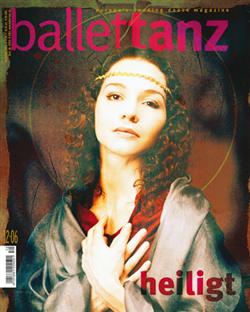
Der ungarische Religionswissenschaftler Mircea Eliade veröffentlichte 1957 die Schrift «Das Heilige und das Profane». Er fragte: Wie kann ein x-beliebiger Raum «heilig» werden? Man kann ein Schloss davor hängen. Dann ist der Raum privat. Man kann beschließen, dass einen Raum nur eine winzige Minderheit betreten darf. So erhält man einen Altarraum oder eine Bühne....