Wuthering Heights

There are many battlegrounds for tradition versus innovation, but few as picturesque as Siamsa Tíre’s theatre in southwest Ireland. Under Mount Brandon, Ireland’s second highest peak, the modern building’s design and materials draw on the rich archaeological pickings that surround it. Behind the ring-fort-inspired stone-clad exterior, a company of seven full-time and 130 community performers preserve music and dance by working with some of Ireland’s most innovative contemporary choreographers.
It’s a process largely unrecognised and commonly misunderstood, with the title of National Folk Theatre freighted with baggage. But Siamsa (the Irish word for entertainment pronounced “shee-am-sah”) is more than a tourist trap. The vision of founder Father Pat Ahern was not only to foster Irish folk culture but to open up the local Irish dance style to other influences. In the 1970s he invited choreographers to collaborate and early success brought the company’s work from the cultural blindspot of Kerry to the spotlight of the Dublin Theatre Festival.
The measure of achievement for dances that mixed idioms was a fusion of the smooth relaxed upper body of ballet and contemporary dance with the ...
Weiterlesen mit dem digitalen Monats-Abo
Sie sind bereits Abonnent von tanz? Loggen Sie sich hier ein

- Alle tanz-Artikel online lesen
- Zugang zum ePaper
- Lesegenuss auf allen Endgeräten
- Zugang zum Onlinearchiv von tanz
Sie können alle Vorteile des Abos
sofort nutzen
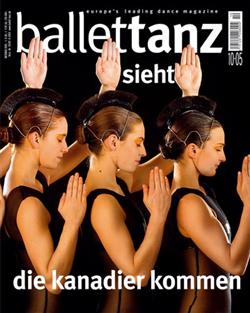
«Kanada ist ein sehr großes Land», sagt Édouard Lock von La La La Human Steps, der seit 1983 auf der ganzen Welt tourt: «In großen Ländern spielt der Körper eben eine andere Rolle als in kleinen: Wie man sich bewegt in einem so großen Land, ist eine Frage, wie man auftritt, wie man Menschen begegnet, wie man sich hält.» In der Hotellobby läuft der Fernseher....
Alfred Döblin schrieb dem Ballett in «Die Tänzerin und der Leib» (1910) eine brutale Deformation des Körpers und damit der Seele zu. Ernst Jünger feierte umgekehrt in «Über den Schmerz» (1934) die Zurichtung des Körpers als das Ziel jeder Seele. Und Rainer Maria Rilke betrachtete den Tanz als eine Verwandlung, in der das Sichtbare endlich unsichtbar und geistig...
Pasolini nennt ihn einfach einen «Besucher». Bei Silvana Schröder steht «der Fremde» zugleich auch für «das Fremde»: ein Engel, den möglicherweise der Himmel schickt, ein Katalysator vielleicht wie einst bei Cranko, der durch seine Existenz alles verändert, erklärtermaßen aber das Fremde, durch das sich das Stück fokussiert. Irgendwann erscheint Mario Perricone,...