More than just black and white – “Medea²”
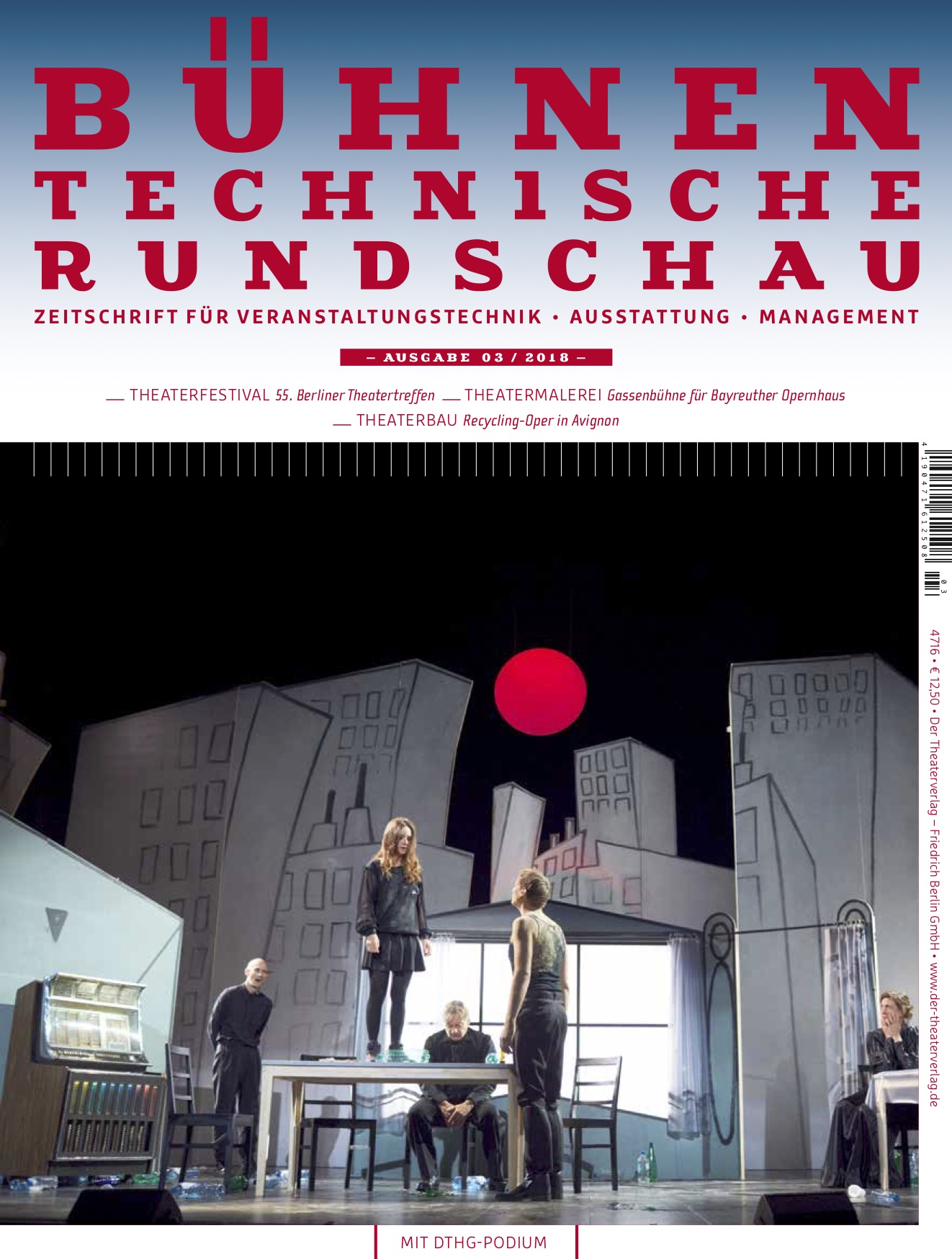
In “Medea²”, the Theater Osnabrück and the Teatro Avenida Maputo take the Medea myth from its ancient beginnings into the modern age. Director Dominique Schnitzler staged the bloodthirsty drama with actors from both ensembles. In this production, a black Medea in Germany meets her mirror image – a white Medea in Mozambique. A wall in the middle both connects and separates them. And hides more behind it.
It is a game involving ambiguity and a dividing wall – a wall as wide as the stage, which separates and connects the players at the same time. They can see through it but they can’t always go through it. Made of glass, it is divided into window sections and marks a separation from another world – the foreign lands. Theater Osnabrück’s Emma Theater, otherwise an empty black stage area equipped only with red plastic chairs for seating, has been clearly and simply arranged into two worlds – Africa and Europe. Two musicians are sitting to the left, almost off-stage: a black African and a white European. They, too, embody the two continents which shape the action of the drama. Titled “Medea²”, the piece starts with a juxtaposition of each side’s three protagonists along the glass wall. Europe stares at Africa and vice versa; black Medea at white Medea; white Creusa at black Creusa and the two Jasons at each other. But in the end, we see the Medeas together and it makes no difference where they come from.
The co-production was supported by the Federal German Cultural Foundation’s Turn fund and the Goethe Institute’s international co-production fund. It’s not the first time that the Theater Osnabrück has worked on a project with an African country. In 2015, it created the piece “Oschi-deutsch” with theatre-makers in Namibia. Dealing with the story of East German children from Namibia, the production was a memorable success that staff still talk about fondly.
The Theater Osnabrück developed the current piece together with actors from the Teatro Avenida in Maputo, Mozambique, as well as its own ensemble, putting them together in an unusual constellation on the stage. From the raw material of the Medea myth, they honed a piece about patriarchy and xenophobia, explored through the lens of a range of literature, from Euripides to Grillparzer and contemporary Mozambique author Paulina Chiziane. These are presented on stage in a good hour of continent-spanning drama in German, Portuguese and English.
The director in Osnabrück, Jens Peters, and Manuela Soeiro of the Teatro Avenida agreed that the two ensembles learned a lot from each other. While Osnabrück exerted some pressure to ensure thorough organisation, everyone benefitted in the end from taking pen to paper and writing everything down. That wouldn’t normally have happened at rehearsals in Mozambique. “We, in turn, learnt to have more improvisational spirit and lightness,” says Peters. They will go on to perform “Medea²” together at the Teatro Avenida in Maputo from 19 August to 1 September.
BTR Ausgabe 3 2018
Rubrik: English texts, Seite 203
von Irmgard Berner
Technik aus dem Jahr 1978 wird saniert
Das Theater Altenburg kann u. a. seine bühnentechnischen Anlagen sanieren und erneuern. Landesmittel von 8 Millionen Euro und 2,6 Millionen Euro vom Kreis Altenburger Land stehen zur Verfügung. Die bühnentechnischen Einrichtungen stammen von 1978. Sie weisen nach fast 40 Jahren große Mängel auf und entsprechen nicht mehr heutigen Vorschriften.
...
Paolo Trovato, a managing director of the Italian stage construction company Decima 1948, talks below about his current project, the Teatro Radar in Monopoli, a tourist resort in southern Italy. A remarkable aspect of the small but beautiful hall is its ability to be transformed from a hall with a completely level floor to a theatre with a range of different seating configurations,...
Der Gasometer in Oberhausen ist bekannt für seine großformatigen Kunstprojekte. Daneben bietet er aber auch immer wieder Raum für thematische Ausstellungen aus den Bereichen Natur und Technik. Gegenwärtig hängt eine Skulptur des Matterhorns kopfüber in der 117,5 m hohen Halle und ist das Herzstück der Ausstellung „Der Berg ruft“. Unsere Autorin ist dem Ruf gefolgt und hat den...