The Fatal Ball

One day in the month of October, 1506, Albrecht Dürer writes a letter from Venice to his friend and sponsor in Nuremberg, Willibald Pirckheimer. It is full of heavy-handed banter, and one of the things that the artist recounts to his friend in Germany is the rather surprising fact that he has undertaken to learn to dance. He has, he says, been to dancing school twice already and pays the maestro one Ducat in return for being taught the fashionable steps of the time.
No more is said regarding these lessons in the often rather severe painter’s correspondence, so we do not know what dances he came to master, nor where he intended to practise them. But it is a nice image to picture; Dürer passing his autumn evenings on the dance floor among Venetian beauties.
Thus the leading artist of the German Renaissance is another link in the centuries-long line of earthlings who have all pursued the happy exercise of acquiring dance skills. It is a line that extends through the ages, from the unknown steps of the Stone Age to our own times. Medieval ideas of paradise and heavenly love centred round a lush and lovely garden where men and women danced and played music together. Such idylls are ...
Weiterlesen mit dem digitalen Monats-Abo
Sie sind bereits Abonnent von tanz? Loggen Sie sich hier ein

- Alle tanz-Artikel online lesen
- Zugang zum ePaper
- Lesegenuss auf allen Endgeräten
- Zugang zum Onlinearchiv von tanz
Sie können alle Vorteile des Abos
sofort nutzen
Gleich drei ehemalige Forsythe-Tänzer lässt der Ulmer Ballettchef Andris Plucis mit seinem zehnköpfigen Ensemble arbeiten. Thomas McManus und Nik Haffner machten den Anfang; Marc Spradling folgte am 24. Mai mit «Pierrot lunaire» und «Lieder eines fahrenden Gesellen». Ob die Frankfurter Schule Garant für Kreativität ist, entscheidet sich jedoch nur fallsweise....
Christoph Wavelet, 38-jährig, Journalist, Essayist und ehemals Tänzer, darf heute definieren, was neue Kunstformen sind. In Saint-Nazaire, wo in der südlichen Bretagne die Loire in den Atlantik mündet, wird er einen neu eröffneten Kulturstützpunkt in internationale Gewässer führen. Der Lieu International de Formes Emergentes heißt abgekürzt ganz einfach LIFE. Kein...
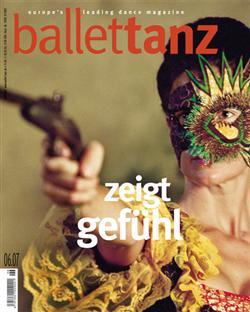
Sind Emotionen das, was uns Tänzer vermitteln, wenn sie sich einfühlen in Rolle, Musik und Haltung? Und was fühlen wir, wenn Tänzer fühlen? Ehrlich: Gefühle teilen sich nur Liebende, nicht das Publikum mit der Kunst.
Viele reden von einer «Wiederkehr der Emotion», aber was meinen sie? Dass wir nicht vergessen sollen, das Taschentuch ins Theater zu tragen? Dass der...