Bodies of Color

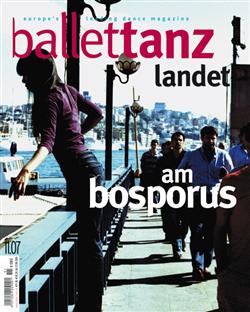
Historians credit Hélio Oiticica and his 1967 Tropicália exhibition in Rio de Janeiro with triggering an explosion of cultural upheaval, soon to be suppressed by years of military dictatorship in Brazil. While the music of Gilberto Gil and Caetano Veloso, and the movement that became known as Tropicalismo, continued to have a lasting influence on world music ever since, the groundbreaking aspects of ‘nova objetividade brasileira’ in the visual arts were largely undervalued.
Hélio Oiticica’s work, alongside that of fellow contemporary artist Lygia Clark, first resurfaced at the 1997 documenta in Kassel, where it caused stunned reactions. Why had it taken so long for curators to (re)discover these Latin American artists whose radical conceptual and performative ideas offered a unique articulation of modernism through (and post) abstraction?
Now Hélio Oiticica (1937-1980) is considered a major player. His and Clark’s incorporation of time and the sensate body at the center of their inventions gives them broad international significance and casts new light on past decades of performance and hybrid art practices. Their work comments in a unique way on today’s aesthetic debate on ...
Weiterlesen mit dem digitalen Monats-Abo
Sie sind bereits Abonnent von tanz? Loggen Sie sich hier ein

- Alle tanz-Artikel online lesen
- Zugang zum ePaper
- Lesegenuss auf allen Endgeräten
- Zugang zum Onlinearchiv von tanz
Sie können alle Vorteile des Abos
sofort nutzen
Tanz ist klasse!
Deshalb nennt sich der kleine, exklusive Verein, der das Education-Programm des Staatsballetts Berlin unterstützt, so und nicht anders. Vor gut einem halben Jahr von einer Handvoll einflussreicher Leute gegründet, dient er allein dem Vermächtnis von Gert Reinholm. Der war bis zu seinem Tod vor zwei Jahren eine der prägendsten...
Thomas Frank und Heiko Pfost sind die neuen Macher der Wiener «Brut». Das war der Name der Foyerbar, als dieses Haus der «alternativen Szene» noch dietheater genannt wurde. «Wie klingt das aber, wenn ich versuche, die Tanzszene international bekannt zu machen und dann telefoniere: I am calling from die theatre?», sagt Thomas Frank, ehemaliger Dramaturg der Berliner...
Michael Diekamp wurde am 27. Dezember 1938 geboren und erhielt seine tänzerische Ausbildung von 1956 bis 1961 an der Folkwangschule Essen unter Leitung von Kurt Jooss. Auch wenn er nach dieser Prägung zwischenzeitlich Engagements in Mannheim und Köln annahm und 1970 als Erster Solist nach Dortmund ging, waren seine Jahre als Mitglied und Solist des...