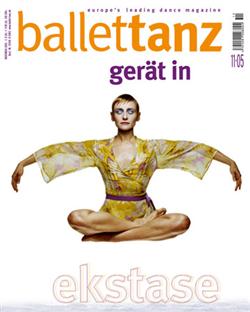
Dances of Ecstasy

The San Bushmen live in a remote part of Namibia. They are the Aboriginal people of Southern Africa whose hunter-gatherer culture goes back over 20,000 years and may now face cultural extinction.
They perform their healing trance-dance according to the health needs or level of tension in the community. The women generate the power by clapping and singing trance-like chants which create an intense energy and vibration.
As the healers dance repetitively around the fire, often for hours, the energy known as “N’um“ that rests at the base of the spine heats up and rises until it bursts out of the crown of the head in a state of transcendence called “Kia.“ In this deep trance state, the healers travel out of their bodies into the spirit world to speak with the spirits. They then have enhanced vision and can see the root of people’s pain and illness. When they return to their bodies, they cure members of the community with hands-on healing.
The Yoruba in Oshogbo, Nigeria, worship deities known as Orishas who are embodiments of “Ashe“ which means vital energy or life force. They are aspects of God and through them human beings can experience the infinite power and light of God. Through ...
Weiterlesen mit dem digitalen Monats-Abo
Sie sind bereits Abonnent von tanz? Loggen Sie sich hier ein

- Alle tanz-Artikel online lesen
- Zugang zum ePaper
- Lesegenuss auf allen Endgeräten
- Zugang zum Onlinearchiv von tanz
Sie können alle Vorteile des Abos
sofort nutzen
Five years ago you were the youngest chief choreographer of any company in the Netherlands. Why do you quit your engagement with Scapino next March? After finishing school I started immediately working for Scapino Ballet: an opportunity to create work for big scale venues, with a large ensemble of highly skilled dancers and many possibilities to work with...
Detlev Alexander, geboren 1968 im Schwarzwald, begann er mit acht Jahren mit dem Tanzunterricht, studierte an der John Cranko-Schule in Stuttgart und an der Heinz-Bosl-Stiftung in München. Bei verschiedenen Kompanien sowie freischaffend arbeitete er u. a. mit Hans van Manen, Jorma Uotinen, William Forsythe, Joachim Schlömer und Jan Pusch. Danach ging er mit «Swan...
Ziya Azazi, Sie sind Sufi, Sie tanzen als Derwisch. Was spüren Sie beim Tanzen? Ist es für Sie ein ekstatischer Akt?
Ja. Mit meinem Körper und Geist bin ich am Zenit und fragil zugleich. Du hast das Gefühl, es geschieht mit dir was. Du bist so offen und aufnahmefähig, dass du dir alles erlaubst, es gibt keine Kontrolle. Man ist hungrig und satt, die Augen tränen und...