Natalia Sologub

One of the leading young female soloists of the Mariinsky Theatre, Natalia Sologub has performed a large number of principal roles in classical as well as modern repertoire. She came to the Mariinsky from Bashkiria in 1998, at first as an understudy for such stars as Diana Vishneva before becoming a unique, unforgettable dancer-actress in her own right. In just a few years, Sologub has advanced to the top as a Mariinsky dancer. Lacking handsome looks, she has however a slim and flexible body, and what makes her really inimitable is her bold, speedy and risky technique.
In addition, she is a clever dramatic actress whose skills quickly made her a strong rival to Vishneva in MacMillan’s “Manon” and Ratmansky’s “Cinderella” (in 2000 and 2002 respectively). But her real peak came last year, with the premieres of Balanchine’s “Four Temperaments” and Forsythe’s “Steptext” at the Mariinsky. In the Choleric variation of the “Four Temperaments” she dominated the whole ensemble, having created a powerful image of a long-legged female with fire in her heart. And “Steptext” immediately made her a star. Following the music of Bach’s “Chaconne,” Sologub’s brutal heroine drew abstract geometry in ...
Weiterlesen mit dem digitalen Monats-Abo
Sie sind bereits Abonnent von tanz? Loggen Sie sich hier ein

- Alle tanz-Artikel online lesen
- Zugang zum ePaper
- Lesegenuss auf allen Endgeräten
- Zugang zum Onlinearchiv von tanz
Sie können alle Vorteile des Abos
sofort nutzen
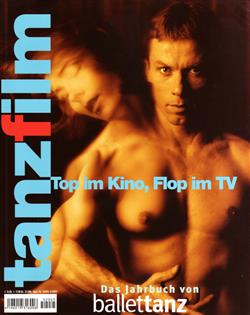
Das wäre doch eine hübsche Idee: Wir behaupten, der Tanz gehört dem Zuschauer. Und weil er ihn nicht einfach aus dem Theater mit nach Hause nehmen kann, kann er ihn sich als Tanzdokumentation dauerhaft habhaft machen. So, wie ein Poster zwar keine Gemälde ersetzt. Aber immerhin. Das Video oder die DVD erhält er gegen eine kleine Gebühr. Versteht sich.
Wollte man...
Die enge Verbindung von Praxis und Wissenschaft zeichnet den neuen Master-Studiengang für Performance Studies an der Hamburger Universität aus. Die Professoren Gabriele Klein, Wolfgang Sting und Theresia Birkenhauer entwarfen das Konzept. Es verbindet kultur- und sozialwissenschaftliche Reflexion, künstlerische Praxis und ästhetische Bildung in den Bereichen...
Dance films are a cinema of poetry, exploring certain ideas through various situations rather than narrative. This definition comes from the pioneer of dance film making who launched a new film movement in the early 1940s, Maya Deren. An independent worker and thinker, she explored the language of film in her theoretical writings as well as in practice. Her...