Where is the Love?

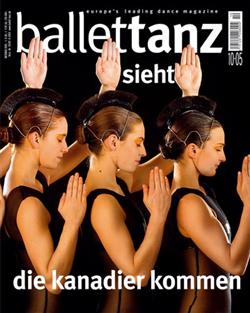
Over the last century dance has traveled from continent to continent, shifting its focal points of creativity and intensity. Historically, the fluctuating cartography situates long traditions in Berlin, Paris, and London. In the mid-1980s rejuvenation occurred in places like Brussels, Ljubljana, Barcelona, and Montéal.
Guy Cools, the former dance programmer and artistic coordinator at the Vooruit Arts Centre in Ghent, who was named artistic director of Montréal’s Fondation Jean-Pierre Perreault in its final days, takes the view that artistic identities, individual qualities and geographic content are linked. “There were new territories – where a group of individuals, and dialectics between them, started to be powerful.”
Montréal rose up as a key centre of dance invention, Cools speaks of a generation of choreographers, led by someone like Paul-André Fortier, “who didn’t necessarily have international recognition, but who influenced a generation.” In fact, there was a diversity of voices within Montréal’s ranks, including artists ranging from Fortier and Perreault, to Édouard Lock, Marie Chouinard and Ginette Laurin. Equally important, the dance community managed to organize itself ...
Weiterlesen mit dem digitalen Monats-Abo
Sie sind bereits Abonnent von tanz? Loggen Sie sich hier ein

- Alle tanz-Artikel online lesen
- Zugang zum ePaper
- Lesegenuss auf allen Endgeräten
- Zugang zum Onlinearchiv von tanz
Sie können alle Vorteile des Abos
sofort nutzen
Ein Quereinsteiger! Weder Choreograf ist er je gewesen, noch Tänzer oder überhaupt Künstler. Ein administrateur! Einer, der Jura und Politikwissenschaften studierte an einer der angesehensten Eliteschulen des Landes. Seit zwanzig Jahren leitet Gérard Violette das Théâtre de la Ville in Paris, Europas größte und älteste Koproduktionsstätte für zeitgenössischen Tanz....
Turin is traditionally linked to French culture, so it is not surprising that a few years after the huge success of the long-running Parisian show “Tango Argentino” by Claudio Segovia and Héctor Orezzoli, premiered in 1983 – a gorgeous revival of the early twentieth century wave of the typical Argentinian mix of music, song and dance, created in Paris – the...
«Kanada ist ein sehr großes Land», sagt Édouard Lock von La La La Human Steps, der seit 1983 auf der ganzen Welt tourt: «In großen Ländern spielt der Körper eben eine andere Rolle als in kleinen: Wie man sich bewegt in einem so großen Land, ist eine Frage, wie man auftritt, wie man Menschen begegnet, wie man sich hält.» In der Hotellobby läuft der Fernseher....