Where is the Love?

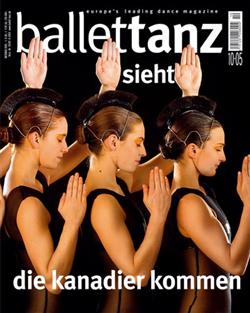
Over the last century dance has traveled from continent to continent, shifting its focal points of creativity and intensity. Historically, the fluctuating cartography situates long traditions in Berlin, Paris, and London. In the mid-1980s rejuvenation occurred in places like Brussels, Ljubljana, Barcelona, and Montéal.
Guy Cools, the former dance programmer and artistic coordinator at the Vooruit Arts Centre in Ghent, who was named artistic director of Montréal’s Fondation Jean-Pierre Perreault in its final days, takes the view that artistic identities, individual qualities and geographic content are linked. “There were new territories – where a group of individuals, and dialectics between them, started to be powerful.”
Montréal rose up as a key centre of dance invention, Cools speaks of a generation of choreographers, led by someone like Paul-André Fortier, “who didn’t necessarily have international recognition, but who influenced a generation.” In fact, there was a diversity of voices within Montréal’s ranks, including artists ranging from Fortier and Perreault, to Édouard Lock, Marie Chouinard and Ginette Laurin. Equally important, the dance community managed to organize itself ...
Weiterlesen mit dem digitalen Monats-Abo
Sie sind bereits Abonnent von tanz? Loggen Sie sich hier ein

- Alle tanz-Artikel online lesen
- Zugang zum ePaper
- Lesegenuss auf allen Endgeräten
- Zugang zum Onlinearchiv von tanz
Sie können alle Vorteile des Abos
sofort nutzen
Why do we dance why do we dance why do we dance – why do we make our very fragile, inadequate bodies dance, our beautiful, intelligent, post-human bodies dance? Post-human or is it trans-human? I mean: Our decoded bodies choreographed within a context or without a context, yielding to the scrutiny of the spectator’s gaze … For freedom?
In the days of the decoded...
Adam Cooper has been a star in Japan, famous for his superb dancing with English Royal Ballet, since his first charismatic appearance in Matthew Bourne’s “Swan Lake” AMP version. He has performed principal roles in Japan in “On Your Toes” and Matthew Bourne’s “Play Without Words.” Several years ago, the huge success of Bourne’s performances here inspired a...
Ein Anlass, ein Lied anzustimmen, ist schnell gefunden. Woran die Geschwister Michèle Anne und Thierry De Mey dachten, als sie ihre Auftragsarbeit für das Folkwang Tanzstudio in Essen «13 Reasons (To ... Sing)» nannten – man weiß es nicht. Die Produktion selbst, man könnte darin mit viel gutem Willen eine Hommage an die Lebensfreude erkennen, ist jedenfalls (noch)...