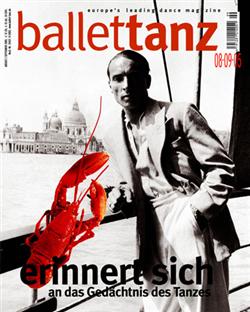
Diaghilev and The False Memory Syndrome

When I finally achieved my ambition to visit Diaghilev‘s tomb on the Venetian island of San Michele I found myself unexpectedly moved to tears by the experience. In the warm, shimmering silence of the walled garden that constitutes the Russian Orthodox part of the cemetery complex I stood before the curious stone altar that marks his final resting place and realised I was experiencing an intense emotion akin to bereavement. Being a non-lachrymose individual I was baffled by this powerful outpouring of emotion and sought in vain to comprehend it.
I had felt no such emotion standing before the grave of Igor Stravinsky a few moments earlier, although Stravinsky‘s music, as a living legacy, could still touch me in more immediate ways than anything associated with his erstwhile mentor. My respect for the achievements of Diaghilev is profound, and my researches into his life and work are extensive, but that moment on San Michele felt like real personal loss; grief for someone I knew. I concluded that my feelings for the great man stemmed from the sensation that I really had known him; not through photographs or accumulated bibliographic or historical knowledge, but because I had known ...
Weiterlesen mit dem digitalen Monats-Abo
Sie sind bereits Abonnent von tanz? Loggen Sie sich hier ein

- Alle tanz-Artikel online lesen
- Zugang zum ePaper
- Lesegenuss auf allen Endgeräten
- Zugang zum Onlinearchiv von tanz
Sie können alle Vorteile des Abos
sofort nutzen
Die Grabeskirche in Jerusalem. Wir orientieren uns mithilfe einer Karte aus dem Reiseführer «Heiliges Land». Die Karte zeigt alle Glaubensrichtungen, von koptisch über armenisch bis hin zu orthodox und lateinisch, mit unterschiedlichen Farben. Das Kirchengebäude ist bunt, es sind mehrere Kirchen in einem. Auf der Felskuppe Golgatha gebaut, wurde es Zeit seiner...
New York City Ballet last performed George Balanchine’s three-act “Don Quixote“ in 1978. Balanchine died five years later. It was widely assumed that his problematic dance version of Cervantes’ famous book had died with him. However, “Mr. B” bequeathed “Don Quixote“ to Suzanne Farrell, the accomplished ballerina who created the role of Dulcinea in the work’s 1965...
Kaum war mein Artikel über Balanchines unvollendete «rjivfhs jvfhjd» in der Oktobernummer 2003 von ballet-tanz erschienen, steckte ich bereits wieder über beide Ohren im Schreiben eines Ballett-Szenarios für den Komponisten Philippe Fénelon und den Choreografen Daniel Larrieu nach Jorges Luis Borges weltberühmter Kurzgeschichte «Las ruinas circulares» – als sich...