Arianna Economou

Arianna Economou grew as an artist within the radical experimentation of the mid seventies in the UK – at Dartington College of Arts – under Mary O’Donnell and Steve Paxton and the Contemporary theatre studies under Peter Hulton and Colette King. Her work both as a teacher and an artist thus has continuous references to developmental movement, experiential anatomy, release work and improvisational/compositional skills, and devised theatre.
What do you teach? I like to teach how movement and words relate to and affect each other, and in the same way connecting movement and sound. Also working with gravity and the relationship of the body within the polarities of sky and earth. In my classes movement is used to connect to the inner workings of the mind and psyche and the whole person. I would like to say I teach “listening” to the body and to the whole group whilst moving. I also teach movement for mixed ability groups, working e. g. within the form of Contact improvisation.
What do you expect from your students? Concentration and trust in the moment of our togetherness. As a group tuning into that multiplicity of presence and possibility including the invisible, getting in touch with ...
Weiterlesen mit dem digitalen Monats-Abo
Sie sind bereits Abonnent von tanz? Loggen Sie sich hier ein
- Alle tanz-Artikel online lesen
- Zugang zum ePaper
- Lesegenuss auf allen Endgeräten
- Zugang zum Onlinearchiv von tanz
Sie können alle Vorteile des Abos
sofort nutzen
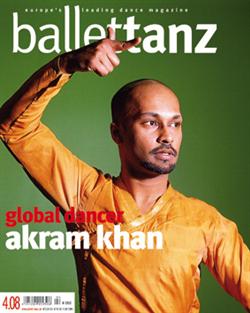
Shanghai ist eine Metropole, in der jeden Morgen ein neues Hochhaus in den trüben Himmel wächst. Wie eine neue Blume. Shanghai sagt von sich, sie schlafe nie. Der Verkehr, der Lärm, 18 Millionen Menschen. Welche europäische Großstadt auch immer – gegen Shanghai wirkt sie wie ein verschlafenes Nest. Jeden Morgen erwacht diese Metropole für ihren Schwindel erregenden...
Sie sind erst 38, und Ihr Name steht neben Jirí Kylián auf dem Ballett-Programm des Genfer Grand Théâtre. Das ist natürlich schmeichelhaft. Jirí Kylián ist doch einer der großen Choreografen unserer Zeit. Ich denke, das hat zur Folge, dass ich das Gegenteil jeglichen...
Antje Pfundtner, Sie arbeiten sonst eher biografisch orientiert, das Living Dance Studio dagegen dokumentarisch und konkret bezogen auf die chinesische Lebensrealität. Wie haben Sie und Wen Hui zu gemeinsamen Fragestellungen gefunden? Anknüpfend an ein Stück über die Flucht chinesischer Landarbeiter in die Stadt, «Dancing with Farm Workers»,...