Planning, building, using
Four new concert halls for classical music were inaugurated in the last six months in Germany – reason enough to dedicate this year’s special summer edition to the subject of arts venue construction and conversion. They are being built, and old ones renovated, at quite a rate, and not only in Germany. The chronology of the projects profiled on the first pages shows that this is about more than “just” equipping an architecturally attractive shell with innovative technology.
When planning the construction or conversion of arts venues, questions need to be asked like: What role do opera houses, theatres and concert halls play in the urban landscape? What equipment do they need to attract and interest audiences now and in the future? In Dresden, the major Kulturpalast venue was converted to house a concert hall for classical music and the central library, instead of the previous huge multi-purpose hall, within the original structure, and so create a lively site of cultural exchange. In Athens, too, music and literature have been brought together. The new arts centre here, home to an opera house and the national library, is a ray of light for the Athenians. It symbolizes quality of life, which is especially important now, in these difficult economic times.
Enormous cultural centres are being built in Asia and the Arab world now, too, partly with the goal of disseminating opera and classical music. The most prominent example is Dubai’s new opera house, set into a completely new-built city quarter. Hopefully it will give the newcomer residents from all over the world the chance to develop a common cultural identity.
In Germany, renovation is a bigger issue than building new theatres. The Berlin State Opera but also the jewel of the historical Opera House in Bayreuth and many other projects show that the country with the most theatres in the world loves its venues and wants to keep them up and running in the future. This project is helped by technological progress. The reports on new technologies and safety standards in this issue show that renovation can broaden the prospects for using historical buildings.
The outcomes presented in conclusion – all apparently successful projects – nevertheless often involved major complications and cost increases over the course of planning and construction. The upcoming Stage|Set|Scenery will feature discussions and an international specialist conference of the German stage technicians’ union, aiming to find ways to improve the situation. For more information and the programme in detail, see the enclosed copy of “Podium”, this time also in English.
We hope you enjoy this special annual edition and see you in Berlin!
Yours the Editors
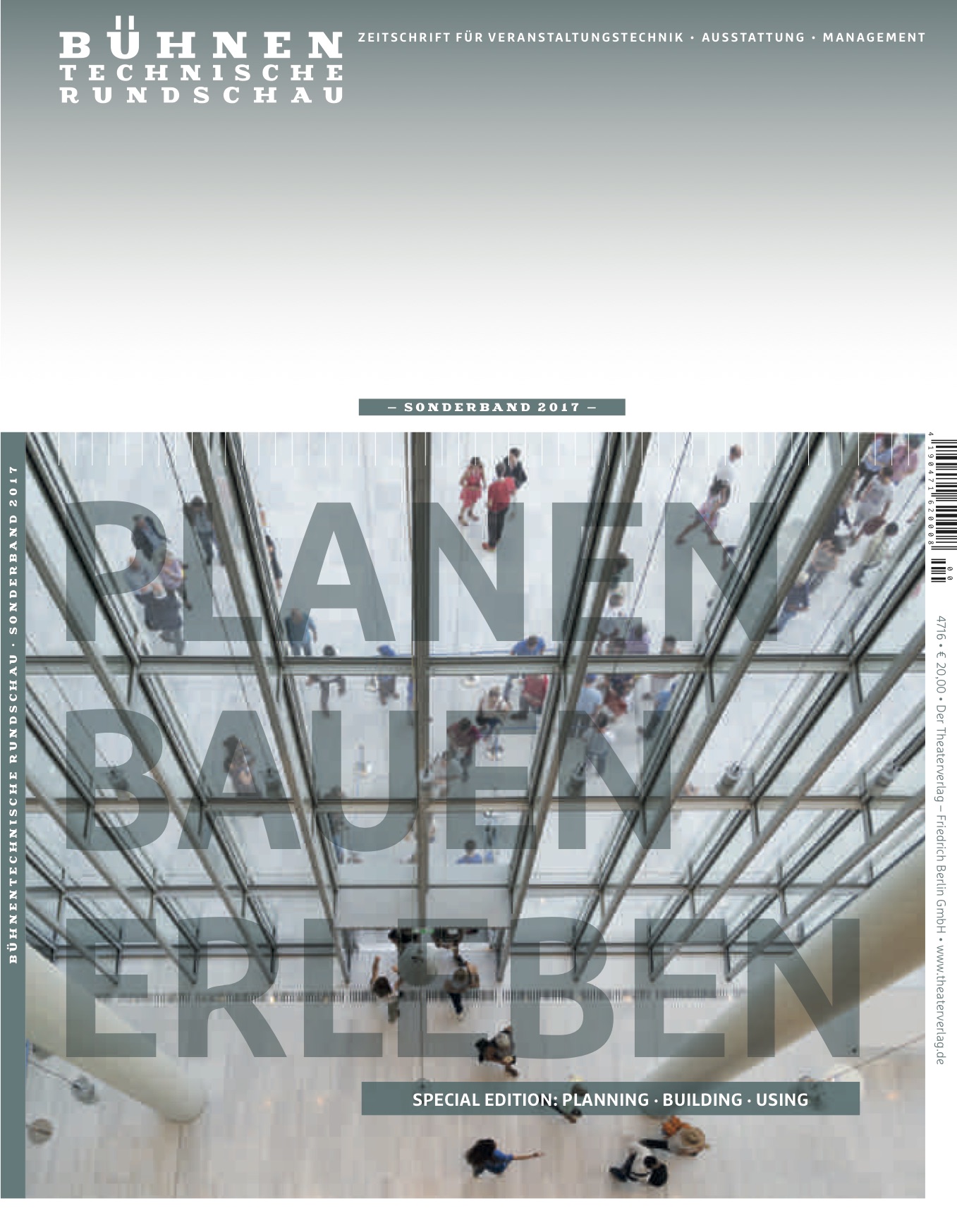
BTR Sonderband 2017
Rubrik: English texts, Seite 213
von Red.
Ein Besuch vergangenen Sommer im Markgräflichen Opernhaus: Die Sicht auf die barocke Pracht von Zuschauerraum und Logenhaus war noch von Gerüsten und Planen komplett versperrt. Baugeräusche drangen nach außen, nur teilweise sichtbar und im Bauzustand lagen die seitlichen Logengänge. Immerhin entschädigte im Foyerbau (zugleich Informationszentrum vom Welterbe Markgräfliches Opernhaus) die...
Die Planung der Veranstaltungstechnik in der Philharmonie ging durch mehrere Hände. Zunächst erhielt das Büro dUCKS scéno aus Lyon den Auftrag vom Generalplaner Herzog & de Meuron mit Höhler+Partner für die Entwurfsplanung. Für die Erstellung der Ausführungsplanung auf Grundlage des vorliegenden Entwurfs war dann nach dem Bauvertrag die Firma HOCHTIEF verantwortlich, die hierfür das Büro...
Das Problem der Hochleistungswinden in deutschen Theatern schildert Volker Kirsch, Leiter Vertrieb der Branche Bühnentechnik bei der Bosch Rexroth AG, drastisch so: „Stellen Sie sich vor, Sie fahren mit Ihrem Mountainbike einen steilen Hang herunter und müssen scharf bremsen. Die Scheibenbremse am Vorderrad greift so gut, dass die Gabel bricht.“ Beim Thema Sicherheit ging es in den...