Inner glow

On 31 December 2017, the performance hall of the Sydney Opera House, the Joan Sutherland Theatre, was ceremoniously re-opened following a renovation period of seven months. With its new stage machinery and enormously improved acoustics, the house is now excellently equipped for the coming decades.
With over 8.2 million visitors each year, the Sydney Opera House is one of the most frequented performing arts centres in the world and Australia’s foremost tourist attraction.
The Joan Sutherland Theatre (JST), integrated into the building, is home to the Australian Opera and the Australian Ballet and the second largest of the opera house’s seven halls. And even if the world-famous shells of the Sydney Opera House still look freshly built, the strain of so much use was starting to show on the technical facilities inside the building. For one, it had been obvious for a while that after 45 years, the JST’s stage machinery would have to be completely replaced to ensure continued operational safety. “The Joan Sutherland Theatre is one of the most active theatres in the world, where some 330 opera, ballet and other performances take place each year. Its almost 50-year-old ‘motor’ has worked hard and now has to be replaced,” explained Louise Herron, AM, director of the Sydney Opera House.
To make best use of the theatre’s unavoidable temporary closure for renovation, the directors of the Sydney Opera House decided to carry out additional work in parallel. As well as a new lighting bridge and more barrier-free access, improvements to the orchestra pit and the acoustics in the auditorium topped the wish-list. Herron described the renovation programme as one of the most exciting periods in the history of the opera house and stressed the importance of modernization: “The renovation will ensure that the opera house has the necessary requirements to present the very best in the field of performing arts.
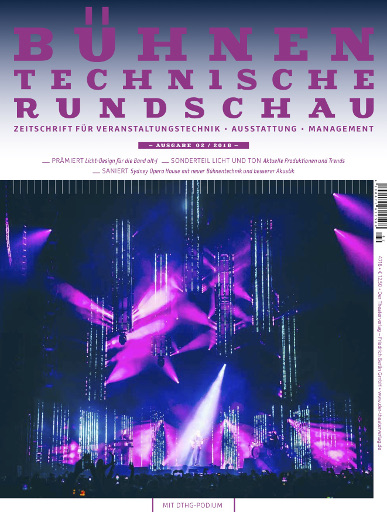
BTR Ausgabe 2 2018
Rubrik: English texts, Seite 186
von Gunter Engel und Ulrike Schuch
Es bedurfte zweier Bildschirme und einiger technischer Tricks, um Hieronymus Boschs Dreitafelbild „Der Garten der Lüste“ in ein Werk für die Bühne zu verwandeln. Die kanadische Artistenkompanie Les 7 Doigts de la Main (Die 7 Finger der Hand) zeigt in ihrer Produktion „Bosch Dreams“ eine kunstvolle Integration von Live-Artistik in einen Animationsfilm. Die skurrilen, schwebenden Figuren...
Seit den frühen 1990er-Jahren wird der Raum als Konstrukt und Gestaltungsparameter zeitgenössischer kultureller, sozialer und künstlerischer Entwicklungen beobachtet und analysiert. Das transdisziplinäre Forschungsprojekt verbindet Architekturgeschichte und -kritik sowie Theater- und Medienwissenschaften.
In Bestandsaufnahmen und Fallstudien konzentriert sich das von der Deutschen...
Wie erreicht man sein Publikum mit welchen Klängen? Wie lassen sich ein visuelles Erscheinungsbild und eine Klangidentität entwickeln? Sounddesigner Jan Paul Herzer und Architekt Max Kullmann sehen in der klanglichen Gestaltung von Räumen großes Potenzial – sei es beim Planen und Einsetzen von Klang in der Öffentlichkeit oder in Ausstellungen und Museen. Ihre Anregungen richten sich...