Planning, building, using
Four new concert halls for classical music were inaugurated in the last six months in Germany – reason enough to dedicate this year’s special summer edition to the subject of arts venue construction and conversion. They are being built, and old ones renovated, at quite a rate, and not only in Germany. The chronology of the projects profiled on the first pages shows that this is about more than “just” equipping an architecturally attractive shell with innovative technology.
When planning the construction or conversion of arts venues, questions need to be asked like: What role do opera houses, theatres and concert halls play in the urban landscape? What equipment do they need to attract and interest audiences now and in the future? In Dresden, the major Kulturpalast venue was converted to house a concert hall for classical music and the central library, instead of the previous huge multi-purpose hall, within the original structure, and so create a lively site of cultural exchange. In Athens, too, music and literature have been brought together. The new arts centre here, home to an opera house and the national library, is a ray of light for the Athenians. It symbolizes quality of life, which is especially important now, in these difficult economic times.
Enormous cultural centres are being built in Asia and the Arab world now, too, partly with the goal of disseminating opera and classical music. The most prominent example is Dubai’s new opera house, set into a completely new-built city quarter. Hopefully it will give the newcomer residents from all over the world the chance to develop a common cultural identity.
In Germany, renovation is a bigger issue than building new theatres. The Berlin State Opera but also the jewel of the historical Opera House in Bayreuth and many other projects show that the country with the most theatres in the world loves its venues and wants to keep them up and running in the future. This project is helped by technological progress. The reports on new technologies and safety standards in this issue show that renovation can broaden the prospects for using historical buildings.
The outcomes presented in conclusion – all apparently successful projects – nevertheless often involved major complications and cost increases over the course of planning and construction. The upcoming Stage|Set|Scenery will feature discussions and an international specialist conference of the German stage technicians’ union, aiming to find ways to improve the situation. For more information and the programme in detail, see the enclosed copy of “Podium”, this time also in English.
We hope you enjoy this special annual edition and see you in Berlin!
Yours the Editors
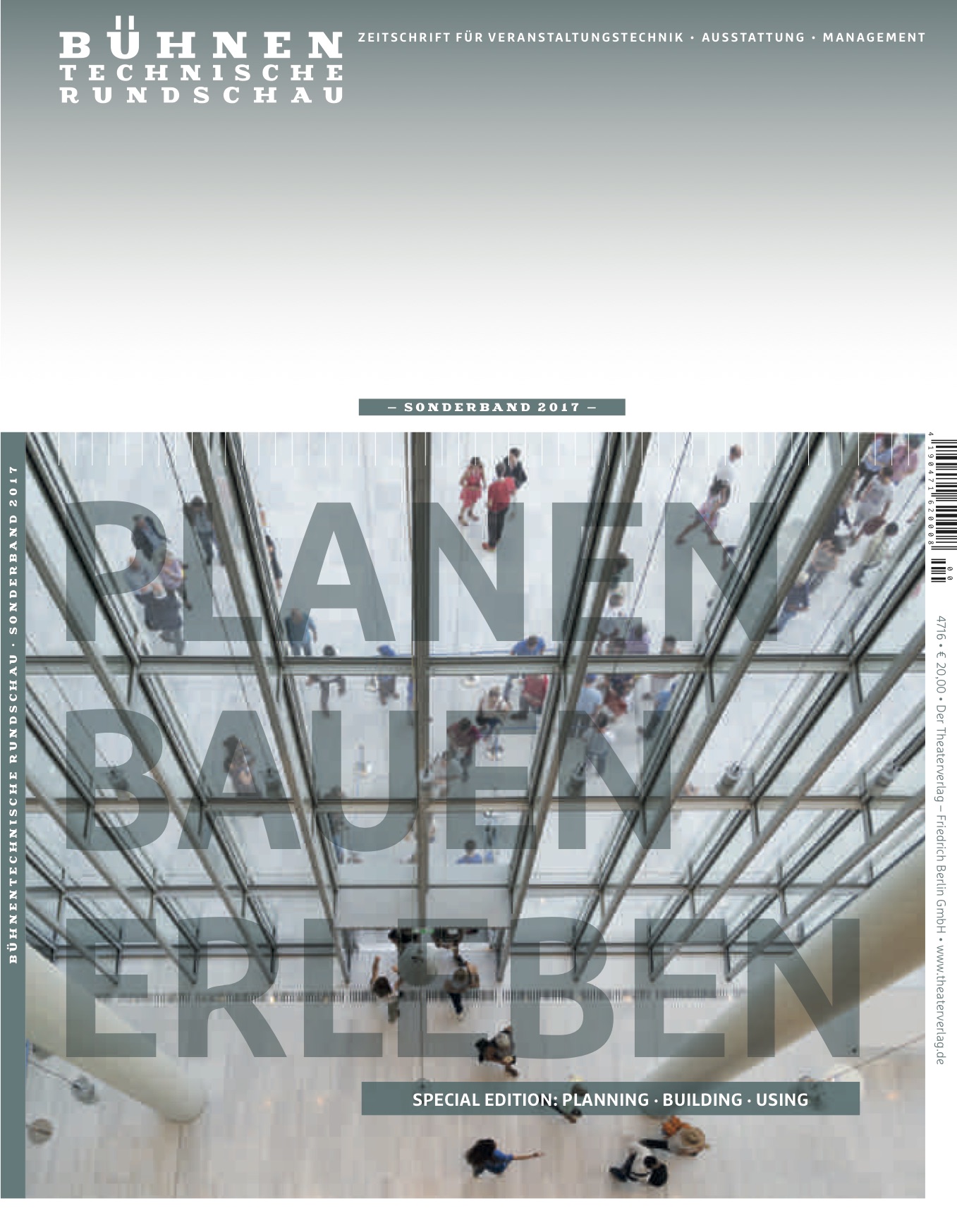
BTR Sonderband 2017
Rubrik: English texts, Seite 213
von Red.
BTR: Wenn in China oder Asien neue Theater eröffnet werden, wird das bei uns in der Presse ja wenig wahrgenommen – außer der Architekt ist international berühmt und Europäer. Sie haben als Planer für Bühnentechnik wohl als einziger Deutscher einen großen Fuß auf den asiatischen, insbesondere den chinesischen Theatermarkt setzen können. Wie kam es dazu?
Horst Kunkel: Zunächst erhielten wir...
Auf dem Areal eines ehemaligen Kraftwerks haben zwei Größen der Dresdner Kulturlandschaft eine gemeinsame Heimat gefunden. Die beiden eigenständigen Häuser Staatsoperette Dresden (SO), vormals in Leuben, und das tjg. theater junge generation, vormals in Cotta, wurden im Dezember 2016 im Kraftwerk Mitte eröffnet (BTR 01/17).
Die Planung der Bühnentechnik für die beiden Theater umfasst...
Mehr als zwölf Jahre liegt die Planungsphase für das erst umstrittene und jetzt bewunderte Hamburger Bauwerk und neue Wahrzeichen zurück. In einem Jahrzehnt änderten sich zahlreiche technische Standards und Anforderungen, was auch die Inspiziententechnik betraf: Zum Teil musste wegen der nicht mehr verfügbaren Produkte die Planung und Ausstattung überdacht und aktualisiert werden.
Auch...